

Capability Overview
Building financial software requires an engineering standard fundamentally different from standard web or mobile development. In banking, there is no tolerance for lost transactions, race conditions on account balances, or unhandled exceptions during high-volume salary batches.Fintechify’s Product Engineering practice builds fault-tolerant, high-throughput distributed systems designed to process millions of transactions with zero data loss. We adhere to rigorous engineering standards: test-driven development (TDD), automated vulnerability scanning in CI/CD, immutable deployment pipelines, and active-active geographic redundancy.
Core Architectural Pillars
01 / Resilient Micro-Frontend Architecture
- Independent Module Deployability: Structuring mobile and web applications into decoupled micro-frontends. Different engineering pods can update card management, investment portfolios, or loan applications independently without requiring a monolithic app store rebuild.
- Unified Design Tokens: Centralized component libraries enforcing strict visual consistency, typography scales, and accessibility standards across iOS, Android, and Web.
- Zero-Latency State Synchronization: Utilizing lightweight local state machines to ensure that balance changes or card freezes reflect instantaneously across all open screens.
02 / Event-Driven Microservices & CQRS
- Command Query Responsibility Segregation (CQRS): Separating read operations (account balances, transaction histories) from write operations (transfers, bill payments) to optimize performance and prevent database contention.
- High-Throughput Kafka Event Bus: Asynchronous event streaming allowing distributed services to communicate without blocking or creating brittle cascading dependencies.
- Idempotent Transaction Processing: Enforcing unique idempotency keys on every financial payload to guarantee that network timeouts or duplicate taps never result in double debits.
03 / Zero-Trust Financial Security Architecture
- Mutual TLS (mTLS) Everywhere: Every microservice-to-microservice call is authenticated and encrypted using rotating X.509 certificates.
- Hardware Security Module (HSM) Integration: Cryptographic operations, PIN verification, and card data encryption executed directly within certified hardware security modules (PCI-HSM).
- Automated Pipeline Security (DevSecOps): Continuous static code analysis (SAST), software composition analysis (SCA) for open-source dependencies, and dynamic penetration testing (DAST) integrated into every pull request.
04 / High-Availability Active-Active Deployments
- Multi-Region Disaster Recovery: Architectures configured for active-active or active-hot-standby operation across geographically separated GCC sovereign data centers.
- Automated Failover & Circuit Breaking: Implementing Envoy and Istio service mesh patterns that automatically isolate degraded dependencies and reroute traffic before customers experience outages.
- Sub-50ms In-Memory Caching: Distributed Redis clusters caching non-volatile customer data to guarantee rapid interface responses even under peak traffic spikes.
Technology Stack & Standards
- Mobile Platforms: Native Swift (iOS), Native Kotlin (Android), and Enterprise Flutter.
- Backend & Middleware: Go (Golang), Java (Spring Boot), TypeScript / Node.js, and Python.
- Event Streaming & Data: Apache Kafka, Redis Enterprise, PostgreSQL, and Oracle Database.
- Infrastructure & Cloud: Kubernetes (EKS / OpenShift / On-Prem K8s), Terraform, HashiCorp Vault.
- Compliance & Security: PCI-DSS Level 1, ISO 27001, OWASP ASVS Level 3, and Central Bank Data Localization Mandates.
Related Case Studies & Proven Work
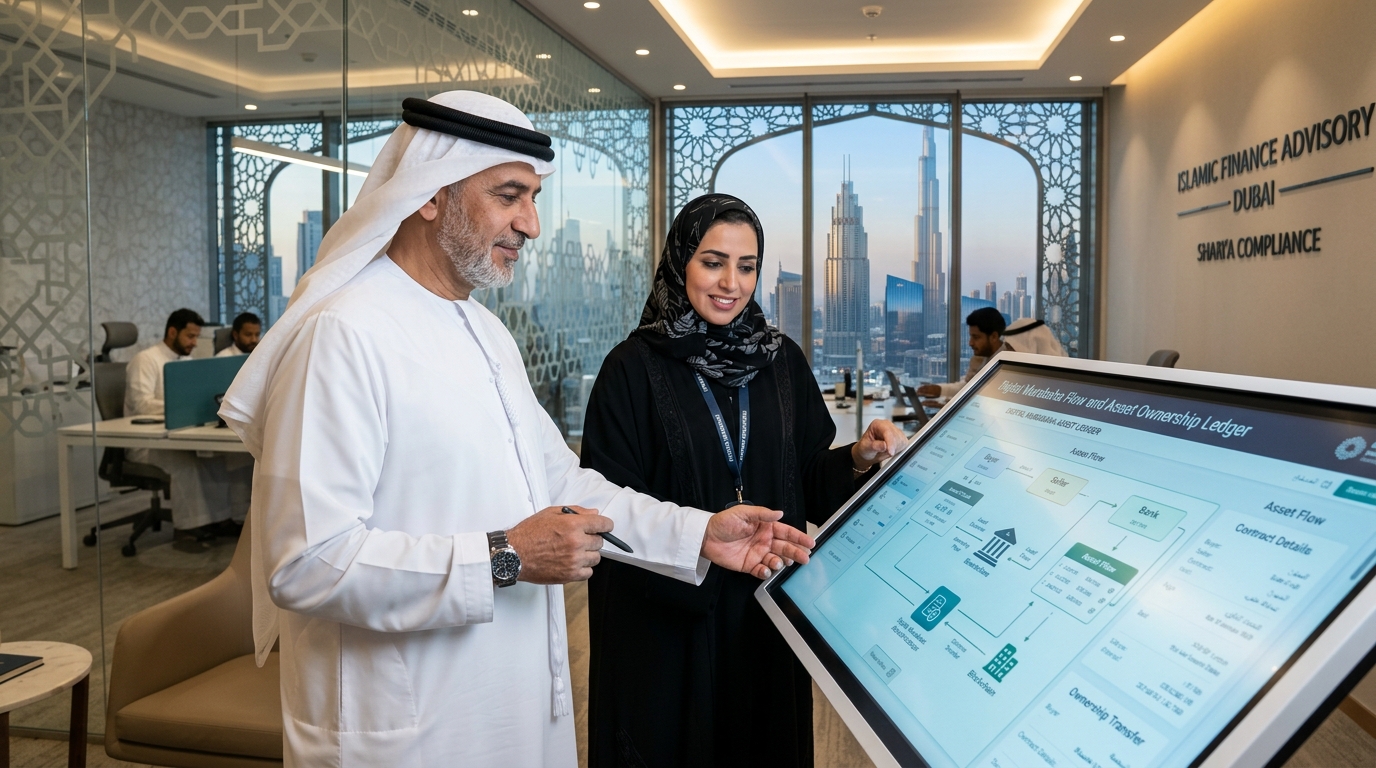
Sharjah Islamic Bank (SIB)
Comprehensive digital platform review and benchmarking across four flagship mobile applications, uncovering friction points and delivering an actionable modernization roadmap.
Explore Engagement
Al Rajhi Bank Malaysia · Rize Digital Bank
Next-generation digital bank platform delivering 15-minute personal financing, Ready CashLine credit, digital term deposits, and 99.98% crash-free stability.
Explore Engagement
GCC NeoBank UX Benchmark Report
Comprehensive usability audit evaluating a 34-step onboarding journey, 13 maturity dimensions, wealth marketplace, and conversational AI.
Explore Engagement